
Press kit: everything for writing about Red Herrings
Here's the logo, the screenshots, the social card, approved descriptions in every length, the company facts and the free course syllabi. Use any of it without asking. Download the kit (2.5 MB zip)
Facts
| Product | Red Herrings, a desktop application for Windows, macOS and Linux |
|---|---|
| What it does | Generates a different digital forensics or incident response lab for every student from one case, with each answer key verified against that student's own evidence, one-click grading and LMS export |
| Company | The Competence Collective, LLC, Tallahassee, Florida |
| Founded | 2026 |
| Pricing | Free First Look cases and a 30-day trial, no account. Paid plans for individuals, educators, departments and security teams; see pricing |
| Privacy | Runs on the instructor's machine. No student data leaves it. See security and trust |
| Contact | Contact form |
Approved copy
Tagline. Forensics and IR labs that grade themselves.
One line. Digital forensics and incident response labs with a different case for every student and a verified answer key.
Short. Generate per-student digital forensics and incident response labs with verified answer keys, one-click grading and LMS export. Runs offline on your machine.
Medium. Red Herrings generates digital forensics and incident response lab exercises for a whole class in one run. Every student gets a different variant of the case: names, timestamps, hashes and answers change per student, so a copied answer is a wrong answer. Each answer key is re-derived from the generated evidence before the lab ships. Grades export to Canvas, Blackboard, Moodle and D2L.
Long. Red Herrings is a desktop application for Windows, macOS and Linux that turns one authored case into an individually generated lab for every student. The evidence is written in the formats the standard tools open: disk images, registry hives, Windows event logs, Windows crash dumps and Linux LiME memory images that Volatility 3 reads, packet captures, mobile extractions, cloud audit logs, and EDR and SIEM exports. Names, timestamps, hashes, addresses and answers change per student from a single seed, so students can't share answers and instructors can tell when they tried. Every answer key is verified against the generated files by an independent parser before release. Grading takes one click, with tolerances for hashes and timestamps and an explanation for every score, and exports to Canvas, Blackboard, Moodle and D2L or posts over LTI 1.3. The library holds 83 cases, from 24 free single-artifact First Looks to multi-hour capstones, tagged to GIAC, CompTIA, EnCE and Cellebrite objectives and to MITRE ATT&CK, with learning pathways, two course packs with full syllabi, a guided mode for stuck learners and timed exams with integrity logging. Everything runs on the instructor's own machine; no student data leaves it. First Look cases run free with no key or account, and a 30-day trial key is emailed on request.
Assets
All of these are in the zip at the top, in the sizes each platform asks for. The main ones:
Screenshots
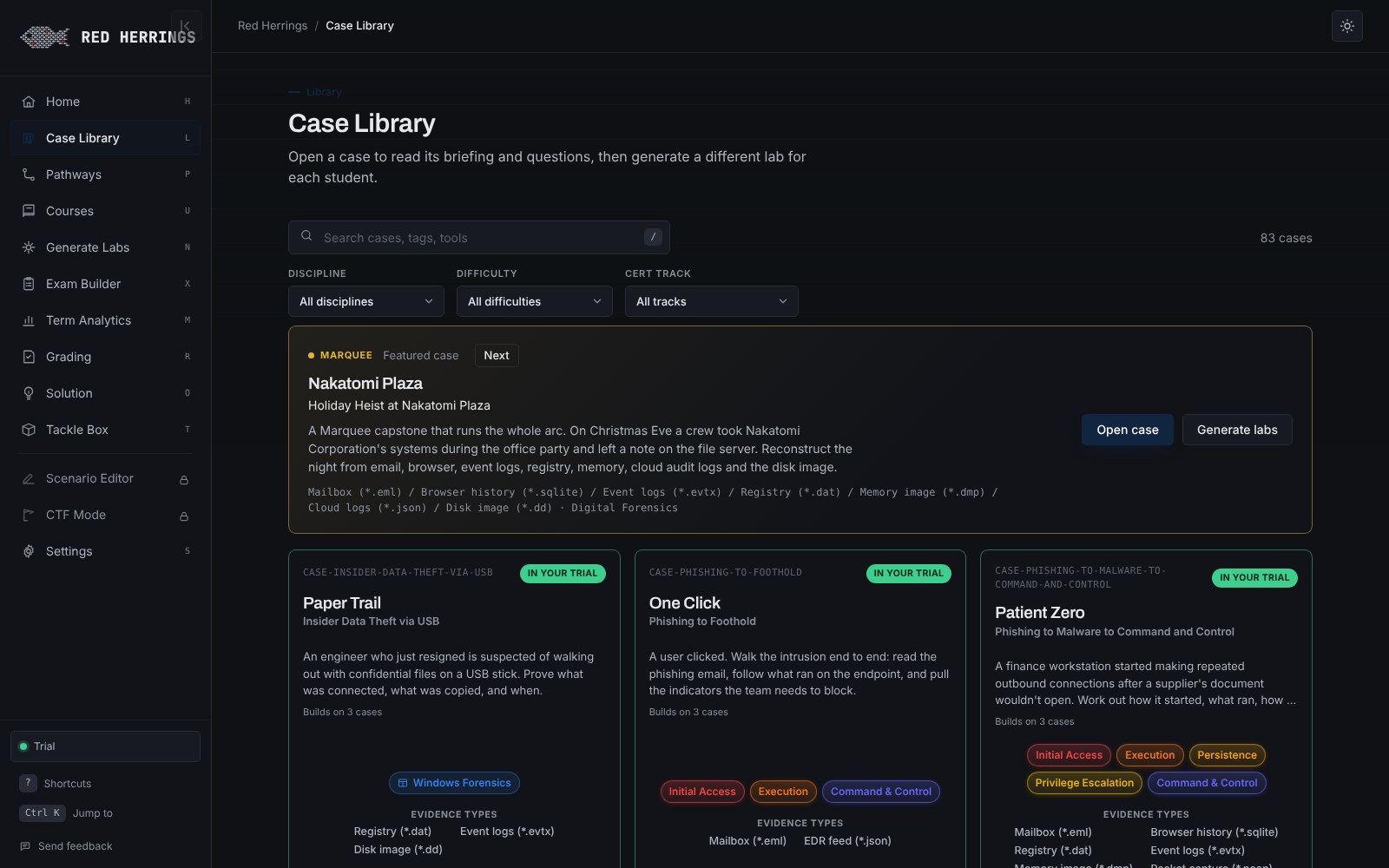
Six app screens at 1600 x 1000, plus 1270 x 760 gallery versions
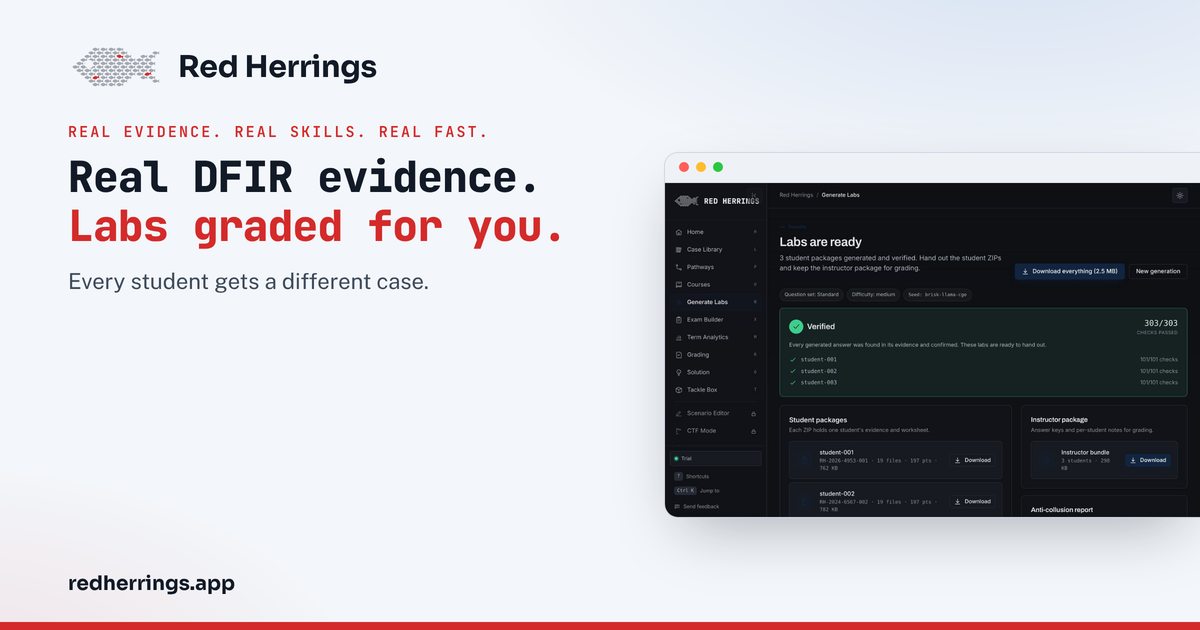
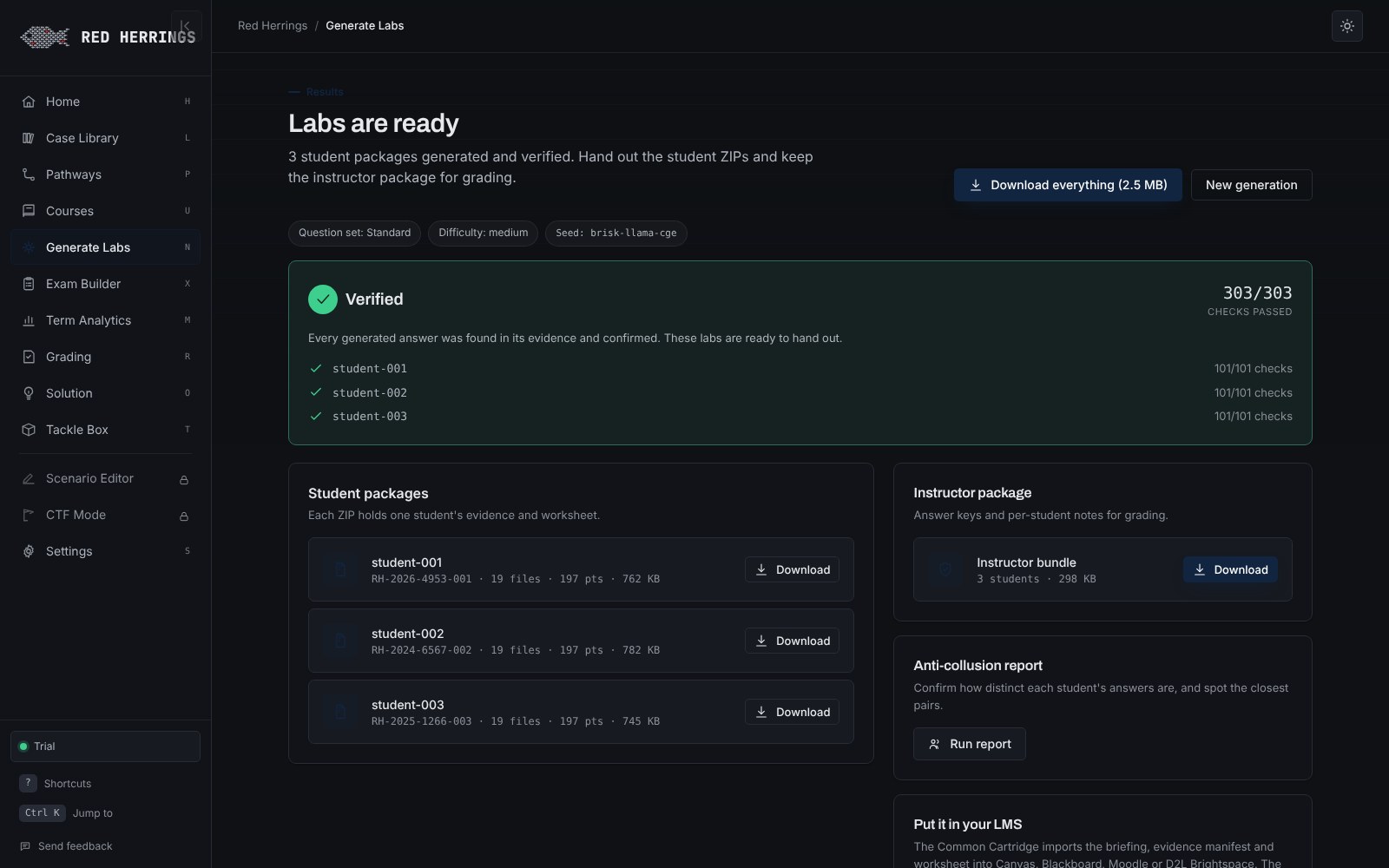
Case library, a case brief, Generate Labs, results, grading and pathways. Two are linked here; the rest are in the zip.
The two free course syllabi and the classroom forms are also in the zip and on the Courses and Free resources pages.